

news
Eurozone crisis
Greece brings forward new austerity plan
Reuters
Athens
Greece is trying to convince the EU and IMF to release an 8 billion euro loan it needs to avoid running out of cash next month despite public anger over austerity measures.
-
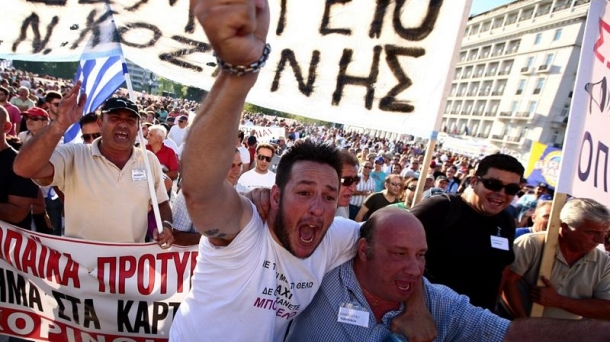
Greeks have scaled back daily protests. Photo: EFE
Greece will announce a plan on Wednesday to bring forward spending cuts agreed under its bailout programme so it can secure a fresh injection of aid and save the country from immediate bankruptcy.
In the face of waning patience among International Monetary Fund and European Union lenders over Athens' failure to meet targets, Finance Minister Evangelos Venizelos criticised EU leaders for failing to handle the crisis decisively and said his country was being "blackmailed" by financial markets.
Greece is trying to convince the EU and IMF to release an 8 billion euro ($11 billion) loan it needs to avoid running out of cash next month despite public anger over austerity measures that are driving Greece into a fourth year of recession.
In a phone call with the lenders' advisers, known as the "troika", Venizelos pledged to bring forward belt-tightening measures agreed in a five-year lending programme.
"We are doing and will do whatever it takes. We won't put the country's fate at risk," Venizelos told parliament.
Greek media reported the measures likely to be brought forward included accelerated public sector layoffs, pension and wage cuts for civil servants, a hike in heating fuel tax and an extension of an already announced one-off property tax.
Venizelos gave no details of the measures but said there was little room to raise revenues, an indication he would not push for new tax hikes in addition to a set of unpopular property and wage taxes imposed since June.
He said Greece was being "blackmailed" by markets, which have pushed up its borrowing costs to unmanageable levels, and European leaders had failed to manage the crisis.
"As an institutional system that manages a common currency that is exposed to speculative attacks from international markets, Europe cannot manage this crisis with the decisiveness and speed and effectiveness it needs," he said. He added: "If it wasn't for the troika's control... unfortunately we would have derailed fiscally."
However, financial markets are almost certain that Greece will default. Economists and politicians fear that if the Mediterranean nation does default, it could split the euro zone and reverberate through the global economy, sending markets tumbling and pushing other vulnerable euro zone members like Italy and Spain over the edge.
Austerity stepped up
A government spokesman said the cabinet would discuss the measures in a meeting on Wednesday and make an announcement later in the afternoon.
Greeks have scaled back daily protests that culminated in violent clashes with police at the start of summer. But the new taxes and persisting impact of public sector job and pension cuts have helped push youth unemployment to 40 percent and hammered small business owners.
The troika agreed to return to Athens early next week to continue talks on the aid tranche. Earlier this month it abruptly left Greece in a dispute over budget slippage and the steps Athens needs to take.
Under Greece's so-called mid-term plan, it has agreed to cut its fiscal gap to 1.2 percent of gross domestic product by 2015, from an estimated more than 8.5 percent this year.
It has also agreed to sell some 50 billion euros in state assets to help pay off a 330 billion euro debt pile that is expected to balloon to more than 165 percent of annual output by the end of the year.
Global markets remain on edge, but stocks held steady and the euro clung above a seven-month low against the dollar after Venizelos's call with the so-called troika of lenders showed the two sides were making progress.
top stories


-
news
New anti-eviction law
Andalucia begins proceedings to seize confiscated houses from banks
-
news
London attack
British police ponder conspiracy after soldier murder
-
Sport
Giro d'Italia
Nibali tightens grip on overall lead after stage victory
-
Sport
Spanish soccer league
Real Sociedad, Valencia resume duel for last Champions League ticket
-
Sport
Giro d'Italia
Nibali tightens grip on overall lead after stage victory
© EITB - 2025 - Privacy Policy - Legal disclaimer - Cookie Policy - Cookie settings